
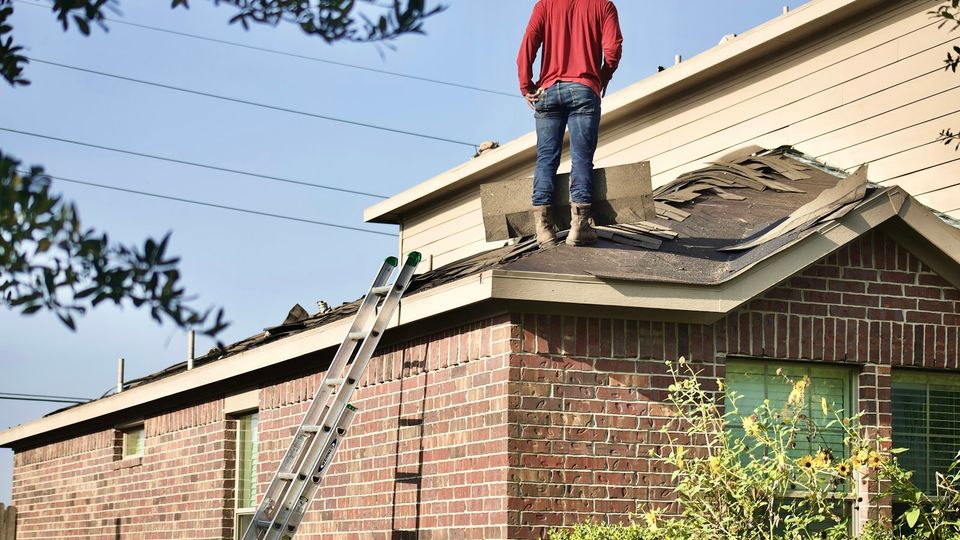
We answer millions of calls a year for small businesses across the trades. The pattern is the same in roofing as it is in HVAC and electrical: the owner who picks up first gets the job, and the owner on the roof at 2 PM is the one who can't pick up.
| What matters | What to look for |
|---|---|
| Storm surge capacity | Handles unlimited simultaneous calls, no busy signals during hail season |
| After-hours coverage | 24/7 answering at the same price, no after-hours upcharge |
| Booking capability | Books roof inspections directly on your calendar |
| Pricing model | Flat monthly rate, not per-minute metering that spikes during storms |
| Voice and trust | Answers as you, not a generic call center |
| Integration | Connects to the CRM you already run: HubSpot, Salesforce, Pipedrive, Monday, plus Slack, QuickBooks and Zapier |
If you already know missed calls are costing you jobs, have your line answering tonight, in your voice.
The roofing call you can't answer
Roofing is one of the few trades where you physically cannot reach your phone during working hours. You're harnessed to a ridge line, running a nail gun, or tearing off old shingles three stories up. When a homeowner finds hail damage on their siding and calls three roofers, they book the first one who picks up.
She isn't leaving a message. Voicemail is where roofing jobs go to die: the homeowner hangs up, scrolls one line further down the search results, and calls your competitor. The same pattern holds across the trades, from HVAC contractors to electricians.
What storm season does to your phone
NOAA's Storm Prediction Center logged 5,432 hail events in 2025, and hail is the single biggest driver of severe-storm insurance claims, with roofs taking the brunt of the damage (Insurance Information Institute, 2026). A hailstorm does not meter its damage out over a quarter. One zip code, one afternoon, and every homeowner with a dented gutter is calling roofers at the same time.
A roof replacement averages $9,500 and runs as high as $46,000 (NerdWallet, 2026). That is what is on the other end of the line.
Say 80 of those calls come in over the afternoon after a hailstorm, and you can only answer one at a time. Half go to voicemail. At $9,500 a job, that is $380,000 ringing out in a single day. A per-minute answering service taxes you for being busy during exactly the season that pays for your year.
The next hailstorm is going to ring your phone 80 times whether or not anything picks up. $29.99 a month decides which of those calls you keep.
What a roofer actually needs from an answering service
Most answering services were built for desk businesses with predictable call patterns. A roofer needs something different: instant pickup during a surge, storm-damage triage that captures the caller's address and damage description, inspection booking against a live calendar, and a monthly price that does not punish a 100-call day.
Speed is the whole game. Contractors who call a lead back within two minutes convert 62% of them, against 28% at the industry-average response time of 42 minutes (ServiceTitan Home Services Benchmark Report, 2025).
A good answering service handles all of this before you climb down: picks up immediately, gathers the caller's address and damage details, books the inspection, and texts you the summary. By the time you're back on the ground, the job is on your calendar.
How Beside works for roofing contractors
Beside is not a bolt-on service that sits in front of your existing line. It is a business phone line with an AI receptionist built in. You either port your existing number or forward calls from your current carrier. Start by forwarding, keep your number, turn it off anytime.
Beside answers in your cloned voice, and 25,000 owners across the trades trust it with their line, backing a 4.8-star rating from roughly 8,900 App Store reviews. It handles about 2.6 million calls per quarter.
The owners who port their roofing line to Beside tell us the same thing: the first storm season where every call gets answered is the one where the business changes shape.
One missed $9,500 roof replacement costs more than a full year of Beside on the annual plan.
Answering service vs owning your line
The real comparison for a roofer is not between two answering services. It is between bolting a call center onto your existing line and having a line that answers for you.
| Traditional answering service | Beside | |
|---|---|---|
| How it works | Forwards your calls to a call center | IS your business line (or forwards from it) |
| Who answers | A stranger reading a script | AI trained on your business, in your cloned voice |
| Storm surge pricing | Per-minute billing spikes during busy months | Flat $29.99/month, unlimited calls |
| After a call | You get a message slip | Full transcript, summary, action items, daily recap |
| Booking | "We'll have someone call you back" | Books the inspection on your calendar in real time |
| Storm season cost | $300 to $810/mo plan, plus $8.50 to $11.50 for every call past your allowance | $29.99/month, unlimited calls |
When 80 calls come in after a hailstorm, a per-minute service charges you for every one. Beside handles them all for the same $29.99.
What it costs, and what missing calls costs more
Beside is $29.99 per user per month, or $16.67 per user per month on the annual plan at $199.99 per year. Each user includes a phone line. Extra phone numbers are $4.99 a month; extra team members are $29.99 each. There are no per-minute fees, no per-call surcharges, and no storm-season surprises.
Compare that to a human answering service. Smith.ai's receptionist plans start at $300 a month for 30 calls and run $810 a month for 90, with every call past your allowance billed at $8.50 to $11.50 (smith.ai/pricing, July 2026). Eighty calls in one hail afternoon is most of a monthly allowance gone before dinner, and the overage clock starts on the next ring.
One roof replacement covers more than 40 years of Beside on the annual plan.
We break down the full comparison across all AI answering services in our pricing guide. And if you run an HVAC or electrical crew alongside your roofing work, we cover those trades too: answering service for HVAC companies and AI receptionist for electricians.
Roofing is a trade where the phone is everything and answering it during working hours is physically impossible. 25,000 owners run their businesses on Beside. See what a full storm season looks like when nothing rings out.