
Running your business on autopilot means automating the routine work and building one reliable place for everything the automation can't handle. Autopilot flies the plane; a pilot still watches it. The businesses where this holds aren't the ones that automated most. They're the ones who check the exceptions.
We build software for owners who run their business from a truck, a chair, or somebody else's kitchen. The pattern in the ones where automation sticks has almost nothing to do with which tools they bought.
You already tried this, and it worked for about six weeks
You set up the reminders. You connected the form to the spreadsheet. For a month it was genuinely good, and then somewhere around week seven you were back to doing it by hand, and you couldn't say exactly when that happened.
The cause sits upstream of the tool and of discipline. You automated the routine and never decided where the leftovers go. If you want the ranked version of which jobs are worth automating in the first place, we covered which tasks are actually worth automating separately.
Autopilot has never meant an empty cockpit
The word comes from aviation, where it means something precise. The system flies the routine legs of the flight. It hands control back the moment conditions fall outside what it was built for. And a pilot watches it the entire time, including the long stretches where it's working perfectly.
Nobody selling you a business on autopilot mentions the third part, and the third part is what makes the first two safe. An automation running unwatched is a business where nobody has looked at the exceptions in weeks.
Count your own exception rate this week
Every automated process handles some share of what arrives and stalls on the rest.
No vendor publishes that share, because no vendor wants the conversation. You can measure your own in a week. Every time you personally touch something the system was supposed to handle, make a mark: a reply you had to rewrite, a booking you fixed by hand, a customer who called twice. If you are marking more than a couple a day, the automation is not saving you the thing you think it is. Whatever it turns out to be, its destination matters more than its size.
| The work | What the automation handles | What it stalls on | Where that lands today |
|---|---|---|---|
| Inbound requests | The standard enquiry | Anything ambiguous or urgent | Usually nowhere, until they call twice |
| Scheduling and reminders | The confirmed slot | A change of plan, a double-booking | Your text messages, mixed in with everything else |
| Invoices and chasing | The reminder on day 30 | A dispute, a partial payment | A mental note you're carrying around |
| Follow-up after the job | The thank-you message | The unhappy one that needs a call | Nowhere |
Silent failure is the expensive kind
A manual process that breaks tells you immediately. Nobody called the customer back, so the customer calls you, annoyed. An automated process that breaks is quiet by construction, because the thing that would have told you is the thing that stopped running.
The customer side is worth seeing plainly. Across 40,843 people surveyed on a consumer-review site about businesses they had contacted, most never heard back at all, and only about a quarter were offered a resolution (Source: PissedConsumer, 2025). Those are people motivated enough to write it down. The ones who aren't just book someone else, and from inside the business nothing happened that day.
There are three ways a broken automation stays quiet:
- It still runs, but against stale information, so it sends the right message to the wrong person
- It fails on a subset nobody thought to test, and that subset is small enough to look like noise
- It works perfectly and delivers its output somewhere nobody reads
The third one is the most common in small shops, and it's the cheapest to fix.
Build the exception path first
This is the part worth doing this week, with tools you already have.
One place, not four
Every exception goes to a single destination, whatever it is and wherever it came from. A note app, a whiteboard in the shop, one labelled folder. Four inboxes is functionally the same as none, because nothing gets checked when checking means checking everywhere.
A standing time, not a spare moment
Pick a time and keep it. Fifteen minutes at 4pm beats an intention to stay on top of things. Owners who work evenings do it in the driveway with the truck still running, before they go inside. The check is short by design, because a long one gets skipped on exactly the days it matters.
A name on it
Even in a two-person shop, write down who owns the queue. Unowned work turns into ambient guilt, and ambient guilt doesn't get done.
An expiry
Anything sitting longer than a day gets escalated or closed on purpose. Silence is a decision either way, so make it the one you chose.
If the volume of admin itself is the problem rather than the exceptions, cutting the admin block itself comes first.
A Tuesday in a two-person shop
The week that breaks this is the one where you're booked solid, which is also the week you stop opening anything that isn't a phone call.
A customer replies to a confirmation asking to move Thursday to the following week, and adds that the side gate will be locked. The automation reads a reply it wasn't built to parse and files it. Nothing errors. Thursday, your guy drives out, can't get in, and comes back. The customer, who told you, books someone else in the afternoon.
Nothing in that story is a technology failure. The message arrived and was captured correctly. It went to a place nobody had opened since Monday. US households spent an average of $12,472 across ten home projects in 2025, per Angi's State of Home Spending Report (Source: GlobeNewswire, 2026). That works out to about $1,250 a project by our arithmetic, and that's what a folder nobody opened cost.
What to keep on manual, on purpose
The rule is about cost, not sentiment: automate anything where a wrong answer is cheap to fix, and keep anything where a wrong answer costs more than the labour it saves.
| The job | Run it unattended | Run it supervised | Keep it manual |
|---|---|---|---|
| Appointment reminders | ✓ | ||
| First reply to a new enquiry | ✓ | ||
| Quotes and pricing | ✓ | ||
| Chasing a late payment | ✓ | ||
| An apology, a refund, a complaint | ✓ |
Supervised is the column most owners skip, and it's where most of the work actually belongs. If you're still choosing what to buy, we ranked which tools are actually worth buying.
What a working exception path looks like today
One example already running, because the phone is the clearest case of an exception arriving in real time.
Beside is an AI receptionist for calls and texts that answers when you can't, handles appointment booking and lead qualification, and turns what happened into transcripts and summaries plus a daily recap, with every conversation labelled so the context is still there when you get to it.
It's $199.99 a year per user, or $16.67 a month, with a 7-day free trial, and it holds 4.8 stars from 8.9K ratings on the App Store (Source: Apple App Store, 2026). One average project at about $1,250 is worth more than six times the annual plan. You can port your existing number or forward the one you already have.
If the phone is the exception path you need first, the plans are here.
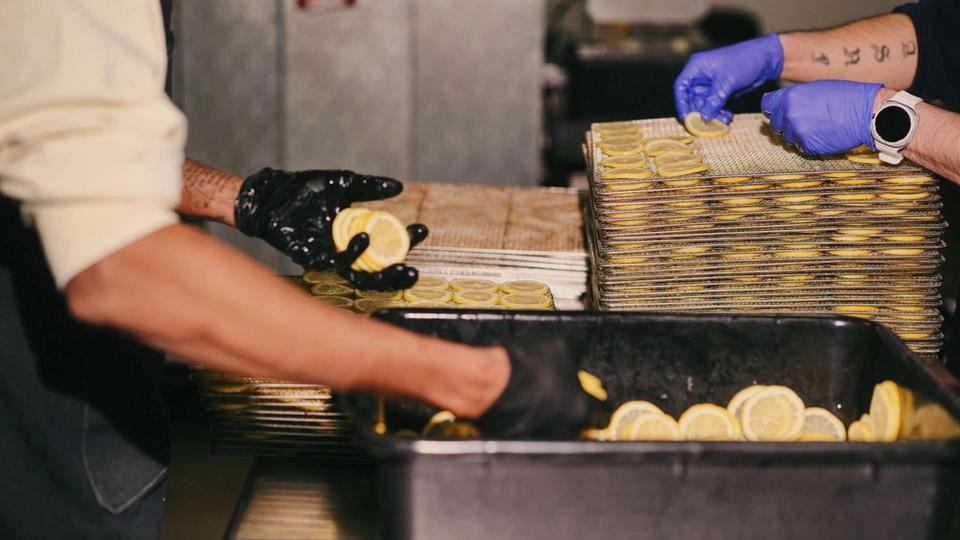
"When there's a problem, they call. Beside asks 'what's the order number' — then I get to see it very clearly." — — Justin Benfaida, Cocktail Garnish Co.
Where the appointment actually lands
Appointments and summaries live in Beside's own iPhone, Android, iPad and web apps. There's no calendar tool listed on Beside's integrations page, so nothing here syncs into a calendar you already keep. If your week lives in Google Calendar, that stays a manual step for now.
What exists today, and what doesn't
The honest limit: what exists today is a digest. Transcripts, summaries, a daily recap, labelled conversations. That's a real review surface, but it's something you read after the fact rather than something that asks permission first.
Where this is heading
The shift worth watching is the owner moving from doing the work to approving it, with the exceptions surfaced instead of buried.
That's the part Beside is building next, and nothing will go out without your OK. It's opening soon for businesses like yours.
If you came here to put the whole business on autopilot
Start with the exception path rather than another tool: one queue, one standing fifteen minutes, one name against it, and anything older than a day escalated or closed. That is the piece your software does not give you today. Beside answers the phone today; the rest is what we're building next.
Sources: PissedConsumer Customer Service Trends, 2025, Apple App Store, 2026, State of Home Spending Report, 2026. Beside pricing and features verified on beside.com/pricing on 2026-08-06. Photography: Beside, from the Cocktail Garnish Co. customer story.